
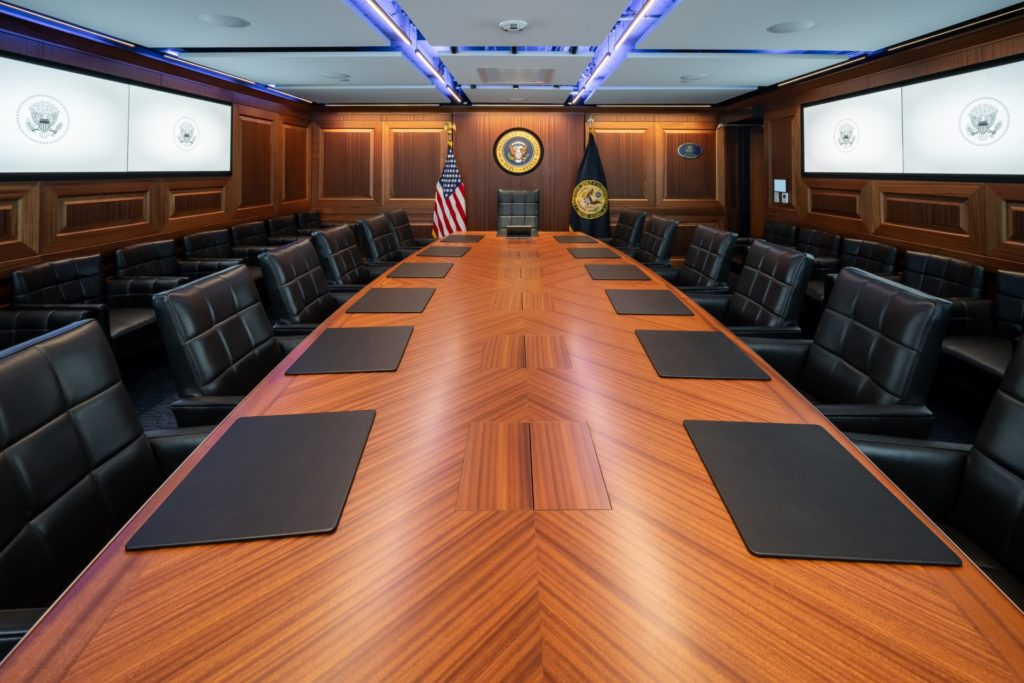
There is a moment every president faces when the noise fades. Advisers leave the room. Phones stop ringing. Papers sit on the desk. And a decision waits.
That is where presidential crisis management truly lives. Not in press conferences. Not in speeches. In silence. In weight. In the knowledge that no one else can make the call.
Crises do not ask for permission. They arrive suddenly. An attack. An economic collapse. A natural disaster. A global standoff. The president steps into a role that very few people on earth will ever understand.
No Playbook Fits Every Crisis
People often assume there is a manual for handling national emergencies. There isn’t. Presidents inherit binders, advisors, protocols, and agencies. But every crisis has its own shape. Its own timing. Its own risks.
Abraham Lincoln did not have guidance for a civil war. Franklin Roosevelt did not have instructions for a worldwide economic breakdown. John Kennedy did not have a checklist for a nuclear showdown.
Each had to learn while standing in the storm.
Presidential crisis management is often built in real time. Listening. Testing options. Asking uncomfortable questions. Waiting when others demand speed. Acting when delay becomes danger.
The Pressure of Imperfect Information
One of the hardest truths about crisis leadership is that decisions are made without full knowledge. Intelligence reports can be wrong. Economic forecasts can fail. Advisers can disagree.
Presidents still must choose.
During the Cuban Missile Crisis, Kennedy did not know if Soviet commanders in the field would obey orders. During the 2008 financial collapse, President Bush did not know if markets would stabilize or crash further. During 9/11, information came in fragments.
In every case, action could save lives or cause harm. This is the invisible side of presidential crisis management. Choosing while knowing you do not know enough.
Listening Before Speaking
Strong crisis leadership often begins with silence. Listening to generals. Economists. Doctors. Intelligence officers. Political opponents. Local officials.
Dwight Eisenhower once said the worst leader is the one who thinks they already know everything. Presidents who listen buy themselves something valuable. Perspective.
Not every adviser will be right. Some will push personal agendas. But hearing many voices keeps blind spots smaller. Presidents who shut out counsel often learn harsh lessons later.
Speaking When the Nation Needs It
Silence inside the room. Clarity outside it.
When a crisis spills into public fear, presidents must speak. Not with grand speeches. With steady words. Simple explanations. Honest tone.
Roosevelt’s radio talks during the Great Depression calmed a nation shaking with uncertainty. After 9/11, President Bush spoke to a grieving country trying to understand shock.
People do not expect perfect answers in these moments. They look for presence. Reassurance. A sense that someone is awake at the wheel.
Presidential crisis management is not only about solving problems. It is also about keeping trust alive while solutions are built.
When Speed Hurts More Than It Helps
Modern media pushes for instant reaction. Social platforms explode within minutes. Cable news fills every gap with speculation.
Presidents feel that pressure. But many of the strongest crisis decisions in history came from waiting long enough to think.
Lincoln delayed announcing certain war measures until he felt conditions were right. Kennedy refused immediate military strikes during the missile crisis. Those pauses prevented irreversible harm.
Speed feels strong. Patience often saves nations.
The Burden No One Sees
Presidents carry crises home. They sit at dinner tables pretending to listen while thinking about casualty reports. They try to sleep with half the mind awake. They protect family from details no one else hears.
Many former presidents later admit the job aged them. Not from speeches. From crises.
Presidential crisis management is not just policy. It is emotional endurance. The ability to carry fear without spreading it.
Mistakes Are Part of the Story
Not every crisis is handled well. Some decisions age poorly. Some cause long-term damage. Some are judged harshly later.
Good presidents do not pretend otherwise. They accept responsibility. They learn. They adjust course when possible.
Truman’s sign on his desk said the responsibility stops here. That mindset remains one of the clearest examples of accountability in crisis leadership.
Why Studying Crisis Leadership Helps
Most people will never sit in the Oval Office. But everyone faces moments when pressure closes in. A business fails. A family emergency arises. A community faces sudden loss.
Studying presidential crisis management shows that fear and uncertainty are part of leadership at every level. Pausing. Listening. Speaking calmly. Acting with care. These habits scale down as much as they scale up.
History offers these lessons freely if we bother to look.
FAQs
What is presidential crisis management?
It is how US presidents handle national emergencies, major threats, and unexpected events that demand urgent decisions.
Do presidents have a crisis manual?
There are procedures and agencies, but each crisis is unique. Presidents still must adapt in real time.
Which presidents are known for strong crisis leadership?
Lincoln, Franklin Roosevelt, Kennedy, Truman, and Eisenhower are often studied for their responses under pressure.
Is acting fast always better in a crisis?
No. Many successful crisis decisions came after careful pauses and listening to advisers.
Do presidents ever regret crisis decisions?
Yes. Many former presidents have spoken openly about decisions they later questioned or would approach differently.
A Final Thought
Presidential crisis management is not about being fearless. It is about functioning while afraid. It is not about knowing everything. It is about choosing when knowledge is incomplete. It is not about public image. It is about private weight.
Behind every major event in American history sits a moment when a president sat alone with a decision. Understanding that moment brings us closer to understanding leadership itself.
